
Conservation and Permaculure Internship & Volunteering in Thailand
Join one of the Andaman coast’s most active restoration programs — spanning tropical forests, mangroves, seagrass meadows, and coral reefs across Krabi Province. Not as an observer. As someone whose fieldwork feeds directly into long-term ecosystem restoration research and practice.
Location
Krabi, Southern Thailand
Duration
Minimum 2 weeks depending on your chosen track
Supervision
Academic Research Director and Research/Volunteer Coordinator
Ideal for
Passionate individuals and students of all levels
Focus
Community-Based Ecosystem Restoration and personal academic growth
Program overview
Why join a conservation and permaculture internship in Thailand ?
Southern Thailand is one of Southeast Asia’s most biodiverse regions — and one of its most threatened. Tropical forests, mangroves, seagrass meadows, and coral reefs exist in close ecological proximity here, forming a living continuum where the health of each ecosystem depends on the others.
At NatureMind Research and Development, we offer a conservation internship in Krabi that goes far beyond observation. Whether you’re drawn to an environmental internship with academic depth, a research internship focused on real field data, or a more flexible form of eco-volunteering, you’ll be working on active restoration projects supervised by MSc and PhD-level scientists — in one of the most spectacular coastal landscapes in the world.
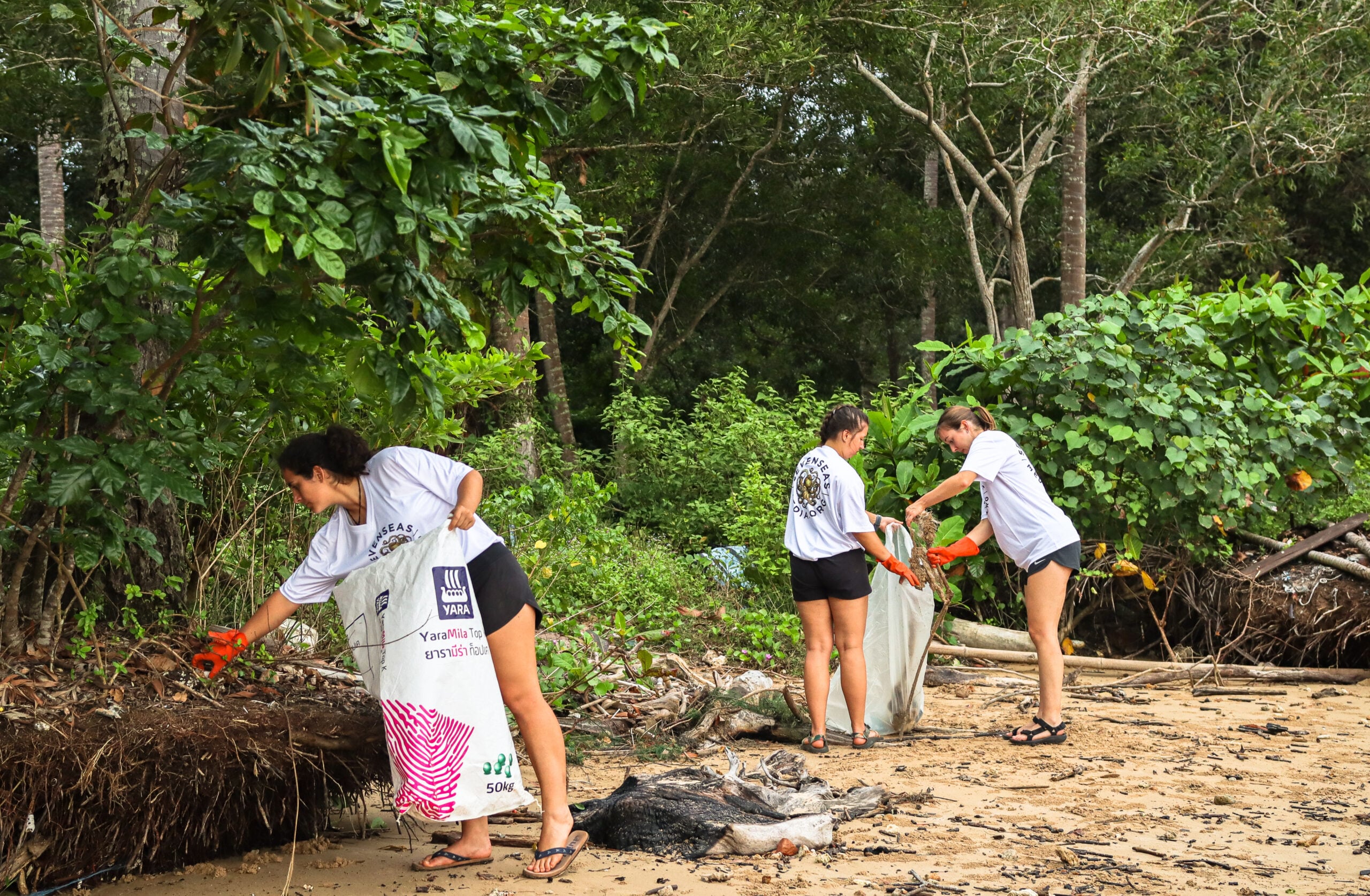
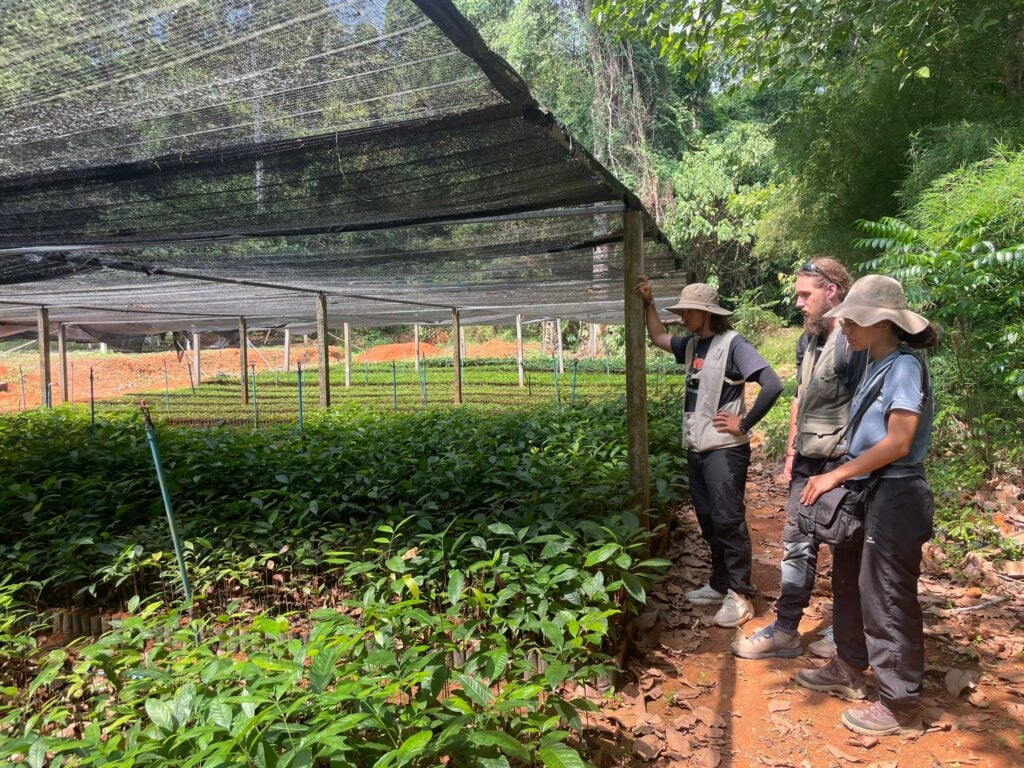
What makes this environmental internship different:
- Academic rigour in the field. Our programs are designed and supervised by our Academic Research Director. You don’t just observe — you design research questions, collect data, and contribute to findings that feed into published research.
- A genuine forest-to-reef approach. We’re one of the few programs in Thailand where a single intern can work across forests, mangroves, seagrass, and coral reefs in the same placement.
- Community-rooted conservation. We work directly with local communities and collaborate with institutional partners like the Forest Restoration Unit of Chiang Mai University or the Department of Marine and Coastal Resources — because lasting restoration can’t happen without local knowledge and buy-in.
- Real flexibility. From two weeks of eco-volunteering to a multi-month research apprenticeship, we match your commitment level, not the other way around.
Krabi’s location on the Andaman Sea also means your off-hours are extraordinary: limestone cliffs, national parks, hot springs, and islands are yours to explore on weekends.
How to join our conservation and permaculture internship in Thailand
Whether you’re applying as an eco volunteer, an environmental science intern, or a research apprentice — the process is simple. Three steps to find your place in our programs.
01
Choose your commitment
Decide whether you’d like to join as a Volunteer, Intern, or Apprentice. Each level offers different depth, duration, and responsibility, from introductory field participation to advanced research and leadership roles.
02
Choose your pathway
Discover your path within nature’s continuum. Whether you’re drawn to hands-on Ecosystem Restoration or Permaculture & Regenerative Living, each pathway offers a unique way to learn, contribute, and create real impact, from forest to reef or from soil to community.
03
Talk to a program advisor
Once you’ve identified your commitment and pathway, schedule a short call with one of our Program Advisors. Together, you’ll clarify your goals, timeline, and contributions, and we’ll support you through every step of the application process
1. Conservation internship & volunteering : Choose your commitment
VOLUNTEERING
Volunteering
“Experience & Contribute”
Volunteering is the most flexible way to get involved, designed for people who want to contribute directly to conservation through hands-on activities without needing to design their own research.
(Minimum 2 weeks)
INTERNSHIP
Internship
“Learn, Explore & Design”
Combine weekly core activities with a mentored mini‑project. Develop a question, collect data, and present your findings with guidance from MSc/PhD‑level staff.
(Minimum 4 weeks)
APPRENTICESHIP
Apprenticeship
"Lead, Research & Create Impact”
Apprentices join our field programs and then carve out a dedicated focus area, whether in coral propagation, dugong habitat use, mangrove phenology, or another topic aligned with our long-term research.
(Minimum 8 weeks)
Eco volunteering in Thailand
Eco volunteering with NatureMind-ED is designed for people who want to make a tangible contribution to conservation and regenerative practices without committing to an academic project. It’s the most flexible way to engage — and one of the most meaningful volunteer abroad programs available in southern Thailand.
As an eco volunteer, you join our weekly field schedule from day one: planting mangroves, conducting species counts, maintaining coral nurseries, or supporting permaculture systems — depending on the season and the active projects. You’ll work alongside interns, apprentices, and local partners, all within the same supportive framework.
- ⏱ Minimum duration : 2 weeks
- 📋 Academic project : not required
- 👤 Supervision : Research/Volunteer Coordinator
- ✅ Ideal for : gap year travellers, career professionals seeking a meaningful break, first-time conservation volunteers
Volunteering in south Thailand with us means contributing to something real — not performing conservation for a camera. Every hour of fieldwork feeds into long-term data that our research team actively uses.
Environmental science & permaculture practice internship abroad
Our internship level is built for students and early-career professionals who want structured academic experience and professional guidance alongside fieldwork. It’s one of the most comprehensive environmental science internships abroad currently available in the Asia-Pacific region — and it’s grounded in actual science and grounded practice, not conservation tourism.
Interns join all weekly field activities, then layer on a mentored mini-project: you identify a question, design a methodology, collect data, and present findings with guidance from our MSc/PhD-level team. Past intern projects have looked at seagrass biomass recovery rates, mangrove phenology, coral nursery survival rates, forest biodiversity indices or regenerative designs.
- ⏱ Minimum duration : 4 weeks
- 📋 Academic project : required (mentored mini-project)
- 👤 Supervision : Academic Research Director + Research Coordinator
- ✅ Ideal for : BSc and MSc students in environmental science, ecology, agroecology, marine biology, geography — recent graduates, professionals pivoting into environmental work
Concrete skills you’ll develop:
- Ecological survey design and execution
- Ecosystem restoration project implementation
- Biodiversity monitoring protocols (forest, coastal, marine)
- Water quality analysis with professional instruments
- Basic biostatistics and data interpretation
- Scientific communication and reporting
Environmental science & permaculture practice internships abroad should give you something concrete to put on a CV and talk about in an interview. Ours does.
Research apprenticeship
The apprenticeship is our highest level of engagement — a long-term research internship in Thailand for those ready to carve out a genuine focus area within our programs.
Apprentices contribute fully in our weekly field schedule, then dedicate a significant portion of their time to a self-directed research project developed in collaboration with our Academic Research Director. Past apprentices have worked on coral propagation techniques, dugong habitat use mapping, mangrove phenology under climate stress, and circular waste management models in Krabi Province. Several have contributed to peer-reviewed publications or academic theses.
This track is also appropriate for professionals conducting independent fieldwork, doctoral students gathering primary data, or researchers from partner universities undertaking placement years.
- ⏱ Minimum duration : 8 weeks
- 📋 Academic project : required (self-directed, research-grade)
- 👤 Supervision : Academic Research Director
- ✅ Ideal for : MSc and PhD students, conservation professionals, independent researchers and academics
This is a research internship in Thailand for people who want to leave with something that counts — data, publications, and the kind of experience that shapes a career.
2. Conservation & permaculture internship volunteering : Choose your pathway
Discover your path within nature’s continuum.
Whether you’re drawn to hands-on ecosystem restoration internships — from forest to reef — or to permaculture and regenerative living, each pathway offers a unique way to contribute, learn, and create real impact in southern Thailand.
Ecosystem Restoration Program
Ecosystem Restoration
Forest to Reef Continuum
Contribute to restoration and research along the forest-to-reef continuum, from tropical forests and mangroves to seagrass meadows and coral reefs.
Permaculture & Regenerative Living Program
Permaculture & Regenerative Living Program
Regenerative Living
The permaculture and sustainable living focus centers on designing and maintaining regenerative systems that support both communities and ecosystems.
Ecosystem restoration in Thailand : Choose your program
Our Ecosystem Restoration pathway covers the full ecological continuum of southern Thailand’s coastal landscapes — from tropical montane forests inland to coral reefs offshore. Each track corresponds to one of our active research and development programs, meaning your fieldwork directly feeds into ongoing research and development efforts with real-world impact.
You can focus on one track throughout your placement, or rotate across multiple ecosystems depending on your interest and duration.
For-rest
Forest & terrestrial biodiversity restoration

Seagong
Seagrass and dugong conservation

Man-core
Mangrove ecological restoration

Pro-Reef
Coral reef ecosystem restoration

Forest restoration & reforestation internship
Southern Thailand’s tropical forests are under pressure from agricultural encroachment, fragmentation, and climate stress — but they are also actively regenerating where conditions allow. Our forest restoration internship focuses on supporting and accelerating that recovery through science-backed methods.
This reforestation conservation internship is grounded in the same methods used by our academic partners, including collaboration with FORRU (Forest Restoration Research Unit at Chiang Mai University) and the Royal Forestry Department.
Interns and volunteers working within the CoForREST program take part in:
- Assisted Forest Natural Regeneration (AFNR) — identifying, releasing, and monitoring naturally regenerating seedlings to restore native forest structure without artificial planting
- Forest biomass quantification — measuring carbon stocks and tree growth to track restoration progress
- Biodiversity surveys — plant and vertebrate species inventories across forest plots
- Seedling nursery management — propagating native species for active reforestation sites
- Forest plot monitoring — long-term data collection at fixed field stations
- Local Impact education & Community development
🌿 Program : CoForREST
📍 Ecosystem : Tropical forest & terrestrial biodiversity
🎓 No prior forestry experience required
Seagrass & dugong conservation internship
Seagrass meadows are critical feeding habitats for dugongs, sea turtles, and a vast array of fish species — yet they remain among the least monitored ecosystems in Southeast Asia. Our SeaGong program is changing that, and interns play a direct role.
Krabi’s coastal waters support one of Thailand’s last significant dugong populations. This seagrass conservation internship places you at the heart of active monitoring efforts for both the meadows and the megafauna that depend on them — in collaboration with the DMCR and regional marine research and community networks.
Field activities include:
- Seagrass biomass and recovery rate measurement — snorkelling and wading transects to monitor meadow health and regeneration
- Dugong feeding trail surveys — mapping herbivory patterns to track population presence and habitat use
- Aerial imagery analysis — reviewing drone footage to identify dugong movements and meadow extent
- Water quality monitoring — assessing nutrient levels, turbidity, and conditions affecting seagrass growth
- Species co-occurrence data collection — documenting the fish and invertebrate communities that use seagrass habitats
🐠 Program : SeaGong
📍 Ecosystem : Seagrass meadows & coastal waters
🔭 Rare access to dugong habitat monitoring
Mangrove conservation internship
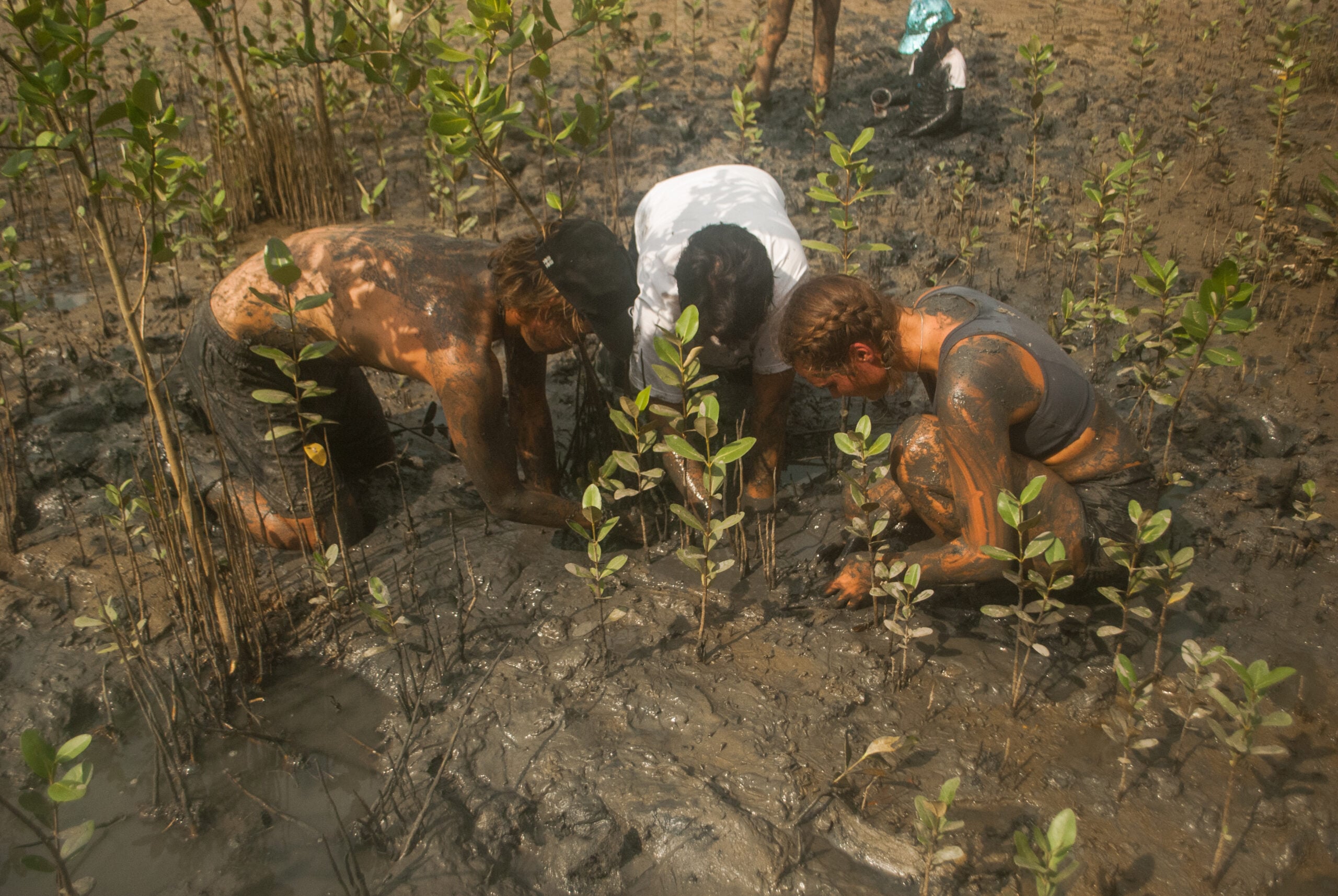
Mangroves are among the most productive and carbon-dense ecosystems on Earth — and among the most rapidly disappearing. In Krabi Province, our ManCoRE program is working to reverse that decline through a community-based ecological mangrove restoration model that prioritizes long-term resilience over short-term planting targets.
This is one of very few mangrove conservation internships in Thailand with a genuine participatory design: local community members are co-designers and managers of the restoration areas, not just stakeholders. The program is supported by the Department of Marine and Coastal Resources (DMCR), The Thailand Mangrove Alliance and developed in collaboration with local community networks.
Interns and volunteers in this track work on:
- Mangrove phenology surveys — tree density, species composition, and structural assessments
- In situ propagation and nursery management — propagating mangrove seedlings for replanting
- Hydrological and sediment monitoring — understanding the conditions that allow mangroves to naturally regenerate
- Biodiversity assessments — documenting the fauna that depend on mangrove systems (fish, crustaceans, birds)
- Community co-management support — assisting local partners in mapping and managing restoration zones
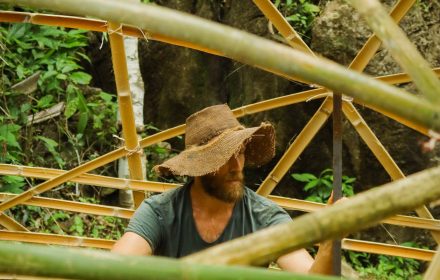
- Mangrove nursery set ups – designing infrastructure to propagate saplings, educate local communities and support field research
🌱 Program : ManCo-RE
📍 Ecosystem : Mangrove systems
🤝 Community-based approach
Marine conservation internship
Thailand’s coral reefs are under significant stress from rising sea temperatures, bleaching events, physical damage and coastal development — but they are not beyond recovery. Our ProReef program focuses on active coral reef restoration and long-term ecosystem monitoring in the waters around Krabi, developed in partnership with Sea Life and regional university networks.
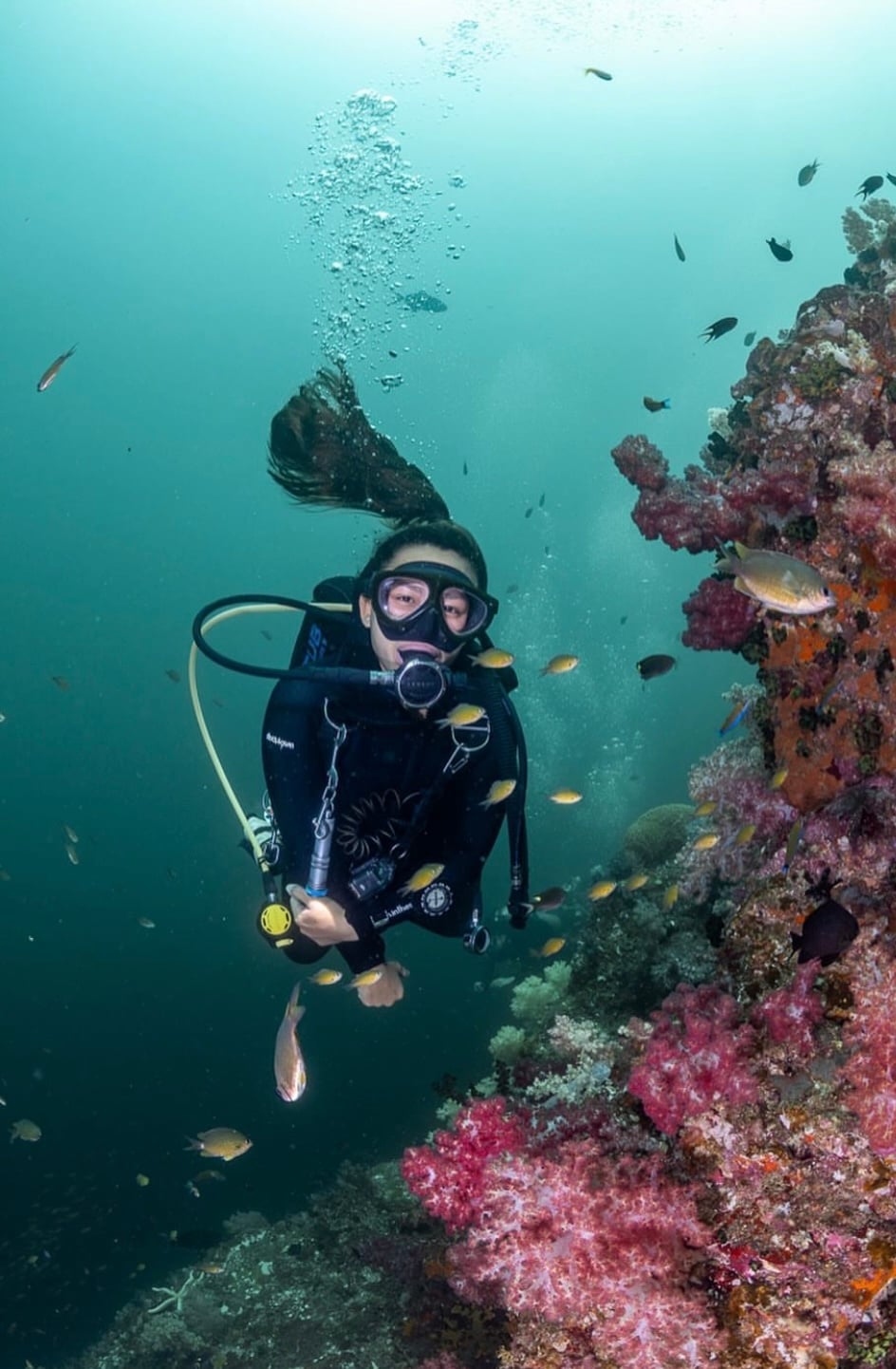
Our marine conservation internship is open to both certified divers and non-divers. SCUBA gear is provided to certified participants during ocean outings; non-divers contribute through snorkelling surveys, data analysis, and lab-based work.
Intern and volunteer activities include:
- Coral reef impact assessments — documenting bleaching, damage, and recovery across reef sites
- Coral propagation and nursery management — maintaining underwater coral nurseries and monitoring fragment growth
- Biodiversity surveys and fish counts — standardised underwater transects to track reef community health
- Water quality analysis — using professional instruments to measure temperature, pH, and other key parameters
- Reef biophysical mapping — contributing to spatial data on reef structure and condition
🪸 Program : ProReef
📍 Ecosystem : Coral reefs
🤿 Open to certified divers and non-divers
Permaculture & regenerative living : Choose your program
Not all conservation happens underwater or in the forest. The way a community grows food, manages waste, builds its shelters, and educates its children is just as much a part of ecological restoration as planting mangroves.
Our Permaculture & Regenerative Living program is a pathway for participants drawn to the intersection of ecology, community living, and regenerative practice. It encompasses two active programs — WastEd (waste management and circularity education) and ReGen (regenerative living systems) — and offers one of the few structured permaculture internships in Thailand with a research dimension.
Wast-ed
Waste management & circularity education

Re Gen
Regenerative living systems
Permaculture & sustainability internship
This is a sustainability internship in the deepest sense — not a course in theory, but a daily practice. You’ll live on a base that embodies regenerative living principles, eat food from systems you help tend, and see firsthand how regenerative living can scale from the personal to the communal.
What you’ll work on:
- Food systems and food forest design — designing and maintaining polyculture systems, soil restoration, composting, and agroecological practices on and around our base
- Biogas and renewable energy — contributing to on-site energy systems that reduce dependence on fossil fuels
- Earth building and low-impact construction — hands-on participation in natural building techniques
- Circular waste management — supporting WastEd’s work with local schools and community partners on waste reduction, sorting, and reuse education
- Agroecology and sustainable living research — for interns and apprentices who want to take this further, there is scope to design research projects on topics like soil health, food system resilience, or circular economy models at community level
A note on deep ecology: this pathway naturally invites reflection on our relationship with nature — not just as a resource to manage, but as something we are part of. Many participants describe this as one of the most personally transformative aspects of their time with us. We create space for that, alongside the practical work.
🌱 Programs : WastEd + ReGen
📍 Focus : Permaculture, agroecology, circular economy
🏡 Live the practice, don’t just study it
Program Activities
Conservation internship in Thailand : Pricing, schedule & accommodation
No matter which track you choose — eco volunteering, environmental science internship, or research apprenticeship — all participants join the same supportive framework at NatureMind Research and Development in Krabi, southern Thailand.
Accommodation is provided in shared rooms, with the option to upgrade to private spaces depending on availability. Airport transfers from Krabi are included, and meals are provided on working days, with breakfast and lunch always included. Dinners are generally not part of the program since the workday usually finishes mid-afternoon, giving participants the flexibility to explore local restaurants or cook for themselves.
On days when project work continues into the evening, we provide dinner instead of or in addition to lunch.
Project transportation is always included — you will be taken to and from field sites each day. All project-related equipment is supplied, and scuba-certified participants are given access to dive gear on ocean days.
The typical work week runs Monday to Friday, with weekends free for your own activities. Krabi is one of Thailand’s most spectacular provinces — limestone cliffs, national parks, hot springs, and islands are all within reach.
Activities & Schedule
Every week at Naturemind R&D looks a little different. Activities shift with the seasons, the progress of our projects, the weather, and the needs of interns or professional apprentices working on their personal research. No two weeks are ever the same, but each blends a balance of fieldwork, learning, and community. Alongside core conservation or permaculture activities, a week may include lectures, seminars, personal project time, and opportunities to facilitate impact sessions such as environmental education with local schools. Participants also enjoy shared meals, wellness and extracurricular activities, and expeditions that showcase the landscapes and ecosystems of Krabi. The sample schedule below offers a sense of structure, though your own week will naturally take on its own rhythm.
While every day depends on weather, season, and project needs, most weekdays follow a steady rhythm that balances fieldwork, learning, and time to recharge. Here’s what a typical day with us might look like:
08.00 – Breakfast together
09.00 – 12.00 – Morning project work (forest, mangrove, seagrass, coral, or permaculture)
12.00 – Lunch break with the team
13.00 – 16.00 – Afternoon project work (monitoring, nursery care, community outreach, etc.)
16.00 – wash up and recharge
18.30 – Dinner (self-cooked or provided if late project day)
Evening – Free time
Weekends are yours to enjoy. Krabi is world-renowned for its beaches, limestone cliffs, hot springs, and national parks, and participants often spend weekends hiking, kayaking, or joining cultural activities such as cooking classes, temple visits, or ethical elephant encounters. Others use the time for rest, journaling, or short trips to nearby provinces. Meals and transport on weekends are not included, giving you full flexibility to explore at your own pace.


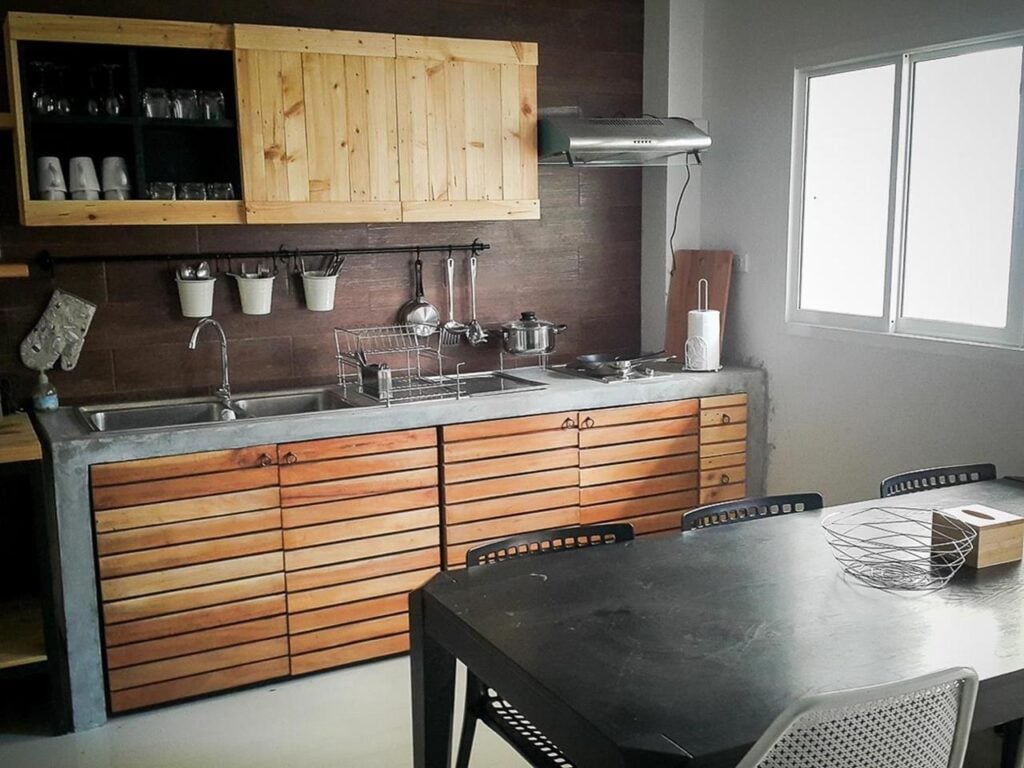

Accommodation in Krabi
the base
Our base is located in Ao Nang, Krabi — nestled at the foot of Thailand's ancient limestone jungle, between the forest and the sea. Our base is a sanctuary for learning, reflection, and reconnection. Sleep in simple, cozy dorms. Eat nourishing meals. Breathe in jungle air. Rewild your spirit.
Location Features:
Shared Bunk beds
Kitchen & Living room
Co-working space & Lab space
Shared bathroom & balcony
- Mountain view



Program fees & pricing
PRICING
Shared accommodation:
- 18.000THB/week (2 weeks)
- 17.000THB/week (3 weeks)
- 16.000THB/week (4-7 weeks)
- 15.000THB/week (8-11 weeks)
- 14.000THB/weel (12+ weeks)
Private accommodation surcharges:
- 600THB/night (king size bed in a private room with en-suite bathroom at the dormitory)
- 1.000THB/night (bungalow cabin at Spirit Mountain – can fit up to 4pax, en-suite bathroom, great for families or couples)
INCLUDES
- Shared accommodation (upgrades available to private room or bungalow)
- Krabi Airport/KBV pick-up and drop-off (Phuket Airport/HKT pick up available at 3.000thb surcharge per way)
- Breakfast and lunch on working days (dinner provided when work extends into the evening) – basic dry goods available at the dorm (pasta, noodles, rice, etc)
- All project-related equipment
- SCUBA gear for certified divers during ocean days
- Wi-Fi at base and accommodation
- Daily transport to and from project sites
EXCLUDES
- Flights
- Medical and travel insurance
- SCUBA diving insurance
- Scuba certification courses (optional, can be arranged locally with partners)
- Visa costs (if applicable)
- Personal items and toiletries
- Additional food/drinks and gratuities
- Weekend meals and personal transport
- Personal free-time activities
- Vaccinations
PAYMENT AND REFUND POLICY
- 30% non-refundable deposit to reserve
- Balance to be paid 1 month prior to arrival
- Refund of balance amount up to 7 days prior to arrival
- Dates change possible at no additional cost
Payment Options: Bank Transfer (Thai and International) | Wise | Revolut | Paypal (6% surcharge)
Packing List
Here’s what to bring for your conservation internship or volunteering program in southern Thailand.
Lightweight breathable shirts, long sleeves for sun/mosquito protection, shorts and long pants, swimsuits, rash guard/snorkeling shirt, rain jacket, fleece/hoodie for evenings, casual wear, hat/cap.
Closed-toe hiking shoes or sturdy trainers, waterproof sandals or reef shoes, flip-flops.
Daypack, reusable water bottle (1L+), reusable cup, dry bag, headlamp, snorkel/mask/fins (optional, gear provided if needed), notebook and pens, quick-dry towel, reusable shopping tote.
Eco-friendly soap/shampoo, reef-safe sunscreen, insect repellent, personal medications (basic first-aid is provided)
Passport and visa, copies of documents and insurance, vaccination proof (if applicable), travel itinerary, digital backups.
Camera/GoPro, musical instrument, book/journal, power bank, favorite snacks.
Apply for your conservation internship in Krabi, Thailand
Whether you’re a student looking for your first environmental science internship abroad, a researcher seeking a field base in southern Thailand, or someone ready to spend a few weeks contributing to something real — there’s a place for you here.
Our programs run year-round. Most participants join within a few weeks of reaching out. The application is simple: tell us who you are, what you’re hoping to do, and when you’re available. Our program advisors will take it from there.
Or reach out directly with your questions: andrea@naturemind-ed.com
NatureMind-ED is based at 414 Soi Chong Pli 6, Ao Nang, Mueang Krabi District, Krabi 81180, Thailand.
Wanna know more?
Talk with our program advisor. Leave your message here and we’ll get back to you soon!
Frequently Asked Questions – Internship & Volunteering in Thailand
What is the minimum duration of the program ?
The minimum duration depends on your chosen track. Volunteering requires a minimum of 2 weeks, internships a minimum of 4 weeks, and apprenticeships a minimum of 8 weeks.
Do I need scuba certification to join the marine conservation internship ?
No. Our marine programs are open to non-divers as well as certified divers. Non-divers contribute through snorkelling surveys, lab-based data analysis, drone imagery review, and protocol design. Certified participants get access to SCUBA gear during ocean days. If you’d like to get certified during your stay, we can help arrange courses locally with our dive partners.
Is prior experience in conservation or biology required ?
No prior experience is required for volunteering. Full training is provided on arrival — from species identification and survey protocols to equipment use and data recording. For internships and the research apprenticeship, some background in a relevant field (biology, ecology, environmental science, etc.) is prefered but not mandatory if you have strong motivation and relevant skills.
Can I get university credit for this internship ?
Many of our interns and apprentices have received academic credit through their home institutions. We are happy to provide the documentation your university requires — including a supervision agreement, internship description, mid-term and final evaluations, and a reference letter. Reach out to discuss your institution’s specific requirements and we’ll work with you to meet them. The organization’s Research Director has active university affiliations and experience supervising students from bachelor to Postdoctoral levels.
What is the best time of year to join ?
Our programs run year-round with rolling start dates. Each season has its character: the dry season (roughly December to April) offers ideal conditions for diving, snorkelling, and offshore work, while the wet season (May to November) is excellent for forest and mangrove activities. Seasonal shifts also create unique research opportunities — contact us to discuss which timing best fits your goals.
How many participants are in the program at once ?
We deliberately keep group sizes small to maintain quality supervision and a genuine community feel. You’ll be working alongside a small cohort of volunteers, interns, and apprentices, as well as our research staff and local partners — not in a large tour group.
Can I join as a couple or with a friend ?
Absolutely. Several participants join as couples or small groups each year. We offer private room and bungalow cabin upgrades specifically suited to pairs and small groups. Just mention it in your application and we’ll ensure your accommodation is set up accordingly.
Is NatureMind Research and Development affiliated with universities or research institutions ?
Yes. Our programs are developed in active collaboration with Prince of Songkla University (PSU), Singapore University of Social Sciences, SOAS University London, , the IUCN, the Department of Marine and Coastal Resources (DMCR), the Royal Thai Navy, and FORRU at Chiang Mai University, among others. Our Academic Research Director oversees the scientific integrity of all intern and apprentice projects.
What language is the program conducted in ?
The program is conducted in English. No Thai language skills are required.
Is accommodation included in the price ?
Yes, shared accommodation is included in the program fee. Prices start at 18,000 THB/week for a 2-week stay and decrease for longer stays. Private room and bungalow upgrades are available at an additional cost.
What is the difference between volunteering, internship, and apprenticeship ?
Volunteering is the most flexible option — you contribute directly to conservation through hands-on activities (minimum 2 weeks). An internship combines fieldwork with a mentored mini-project where you collect data and present findings with guidance from MSc/PhD-level staff (minimum 4 weeks). An apprenticeship is the most advanced track, where you lead your own dedicated research focus area in collaboration with our long-term projects (minimum 8 weeks).
STAY CONNECTED
Discover Environmental Insights, Conservation Stories, and Adventure Journeys